“Mexican food is one of the greatest culinary remix projects in human history”
The Authenticity Lie
A 9,000-Year-Old Question Hiding in Your Taco
There's a word that gets thrown around Mexican restaurants: authentic.
Authentic recipes. Authentic flavors. Authentic Mexican food, not that other stuff. We've all heard it. Most of us have said it.
But here's a question worth sitting with for a moment: authentic to what?
The Snapshot
When most people call a food "authentic," what they actually mean, if they're honest, is that it tastes like what they grew up with. Their mother's version. Their grandmother's kitchen. The specific Mexico of their specific childhood.
But it's worth noticing that Mexico is a country of 32 states, 68 Indigenous languages, three coastlines, a desert, a jungle, and roughly 130 million people who do not agree with each other about almost anything, including how to make a salsa.
The kid from Jalisco thinks Yucatecan food is strange. The Yucatecan finds Norteño food unfamiliar. The Oaxacan quietly believes everyone else is doing it wrong. And every one of them is absolutely certain that their food is the real Mexican food.
They can all be telling the truth about their own kitchen. The trouble starts when one kitchen tries to speak for a country.
The Things You Thought Were Ancient
Here is where it gets interesting.
Tacos al pastor — perhaps the most iconic Mexican street food on Earth, are descended from Lebanese shawarma, brought to Mexico City by Lebanese immigrants in the early 20th century. The vertical spit, the marinated meat shaved thin: all Lebanese. Mexican cooks swapped lamb for pork, added pineapple and achiote, and invented something glorious. But the bones of the dish crossed an ocean.
Birria, carnitas, barbacoa — all built on animals (goats, pigs, cattle) that did not exist in the Americas before 1492. Pre-Columbian Mexico had no cows, no pigs, no goats, no sheep, no chickens. Every dish you love that involves those animals exists because of contact with the rest of the world.
Flour tortillas require wheat, which is from the Fertile Crescent. Northern Mexican cooks, who couldn't grow corn easily in arid land, adapted brilliantly. So when someone insists "real Mexicans only use corn," they are unknowingly erasing an entire region of Mexico.
Cheese, crema, the entire dairy tradition — impossible before European livestock arrived. Rice came via the Manila Galleon trade from Asia. Cilantro is Mediterranean. Limes traveled from Southeast Asia through Persia through Spain before reaching a Mexican kitchen. Even the bolillo (the bread your grandfather swears is the soul of Mexico), owes its shape to French bakers who came with a doomed Austrian emperor in the 1860s and stayed long after his empire fell.
What's actually, originally Mexican? Corn. Beans. Squash. Tomatoes. Tomatillos. Avocados. Cacao. Vanilla. Every chile on Earth. Turkey. Nopales. That's the pre-Columbian pantry. Everything else arrived.
This isn't a flaw in Mexican cuisine. It's the entire glory of it. Mexican food is one of the greatest culinary remix projects in human history, Indigenous Mesoamerican brilliance layered with Spanish, Lebanese, French, African, and Asian influences, filtered through 500 years of ingenuity. The genius isn't in keeping the kitchen pure. The genius is in what Mexican cooks did with everything that washed up on shore.
When Does "Fusion" Become "Tradition"?
Tacos al pastor were invented in the 1960s. At the time, they were strange, immigrant fusion. Today, they are sacred.
So how long does it take? Fifty years? A hundred? When exactly does something stop being 'fusion' and become real?
The answer is simpler than you think. The line between fusion and tradition is just time and acceptance. There is no magic moment. There is no committee that votes. Something is "fusion" until enough people eat it long enough that it becomes tradition..slightly different. Who was making her mother's recipe..slightly different. Recipes are not fossils. They're living things. They evolve, or they vanish.
The "authentic" recipe is, more often than not, simply the mutation you happened to be born next to.
A Quiet Word About Hole-in-the-Walls
While we're sitting with uncomfortable questions, here's one more.
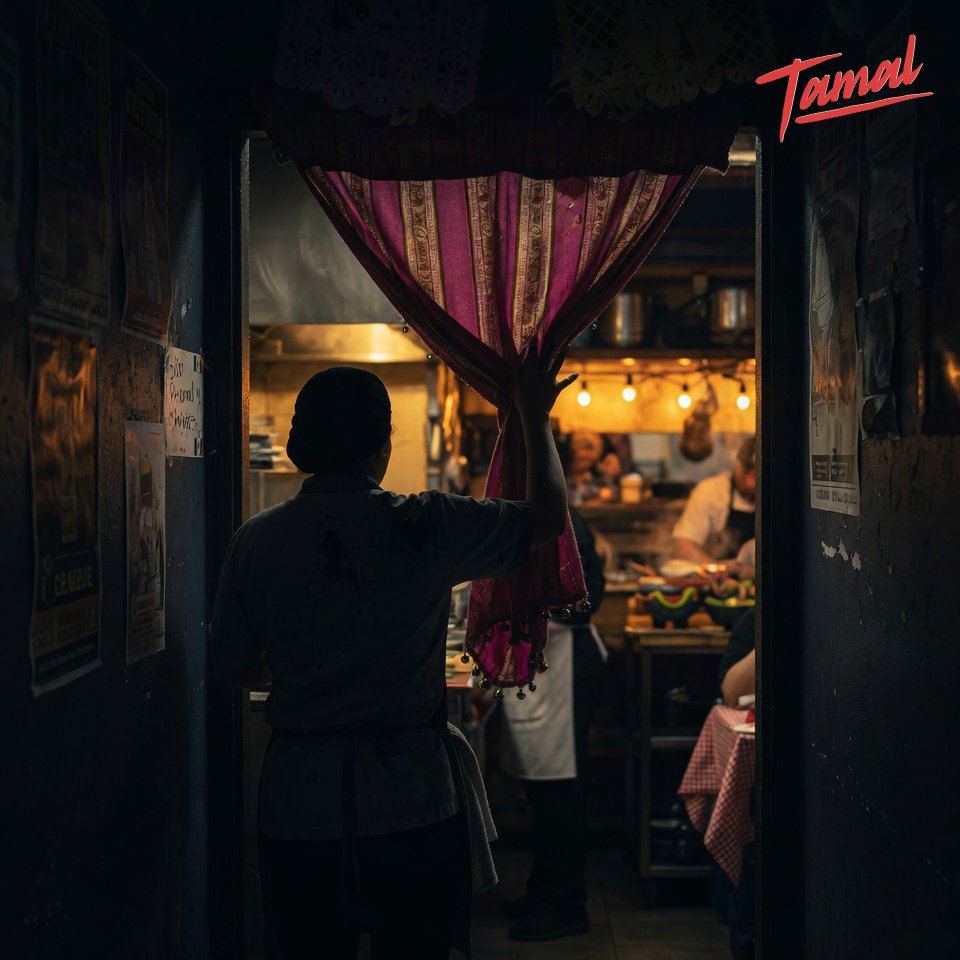
There's a belief, almost a religion, that the best Mexican food is always found in a hole-in-the-wall. The smaller, the dingier, the more wonderful.
Sometimes that's true. A small, focused, family-run kitchen can produce world-class food.
But somewhere along the way, we collectively decided that disrepair itself was a credential. That peeling paint meant flavor. That a broken light fixture was somehow seasoning. And in doing so, we made it harder for talented immigrant cooks to charge what their food is actually worth, and easier to dismiss any Mexican restaurant that dared to look nice, plate carefully, or fix the leak in the ceiling.
A clean room is not a betrayal. A fair price is not a betrayal. The cooking is the cooking. Everything else is just the building.
So What Is Authenticity, Really?
Perhaps it's this: not a snapshot, but a stream.
Not a single recipe locked in time, but a 9,000-year-old conversation between corn and the hands that shape it. A conversation that started in Mesoamerica before the pyramids and is still going on this morning, in kitchens all over the world.
By that definition, the long, honest one, almost everything is authentic. The grandmother's tamales. The Lebanese-Mexican taquería. The young chef in Mexico City using French technique on Indigenous ingredients. The blue corn tamal made in a clean kitchen with working lights.
All of it. Authentic. All of it. Mexican. All of it. Part of the conversation.
The next time you hear someone say a restaurant "isn't authentic," try a quiet experiment. Ask: authentic to what? To whom? To which year, which region, which family?
You'll find, almost always, that what they really mean is it doesn't taste like what I expected.
Which is fine. That's a real thing to feel. But it isn't the same as truth.
At Tamal, we don't claim to taste like your grandmother's kitchen. We can't. Her tamales belong to her, and to you. What we offer is something else..blue corn, ancient technique, careful hands, a clean room. One more voice in a conversation that's been going on for 9,000 years. We hope you'll pull up a chair.