The 9,000-Year-Old Food That Refuses to Die
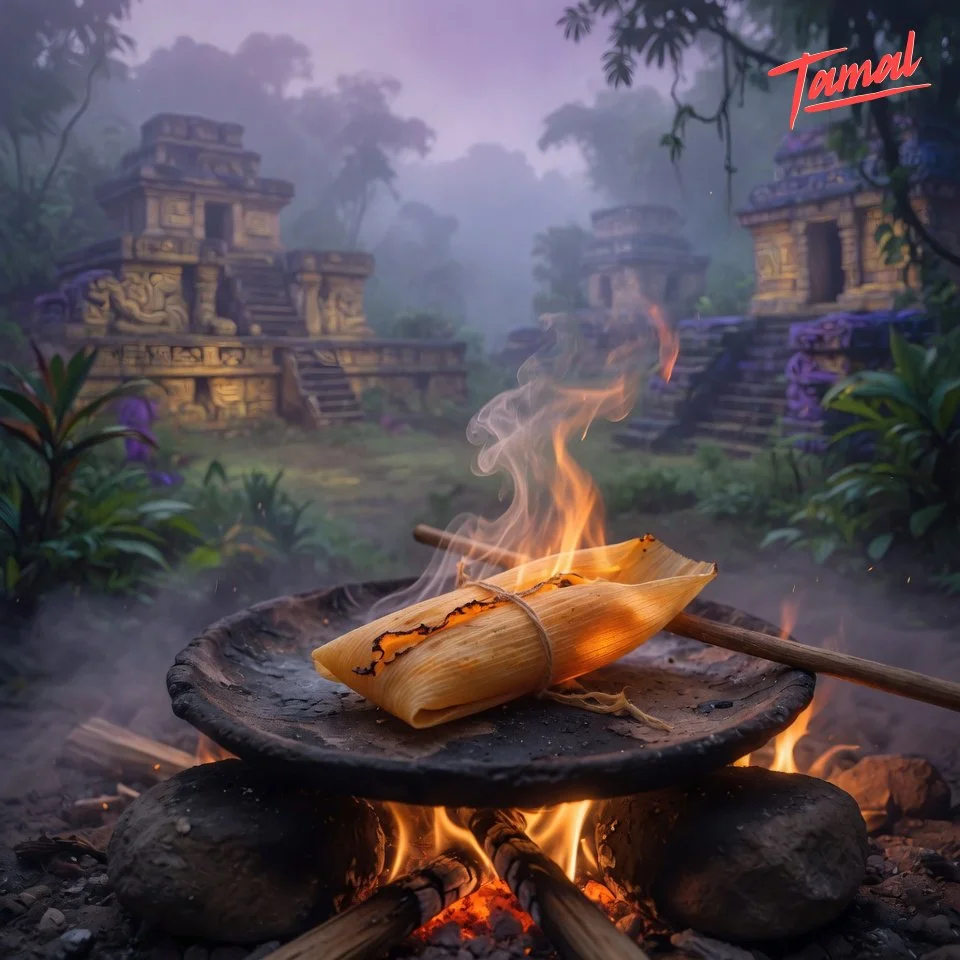
Let me tell you about a food so stubborn, so culturally indestructible, that conquistadors, dictators, and even the relentless march of fast food couldn't kill it.
The tamal.
Yes, tamal. Singular. "Tamales" is plural. If you've been saying "a tamale" your whole life, I'm sorry to be the one to break it to you. But stick around, because that's the least interesting thing you'll learn today.
When Tamales Were Older Than the Pyramids
Picture this: It's 7,000 BCE. The Great Pyramid of Giza won't exist for another 4,500 years. Stonehenge is still just a field. Writing hasn't been invented. And somewhere in Mesoamerica, a woman is wrapping masa in a leaf and steaming it over a fire.
She is making a tamal.
That tamal, that exact food, with only minor revisions, is what you can buy from us now at Tamal anytime. Think about that. Empires have risen and crumbled. Languages have been born and gone extinct. Continents have been "discovered." And the tamal? The tamal just kept showing up.
Try naming another dish that has survived nine millennia essentially unchanged…
The Portable War Ration That Built Civilizations
Here's where it gets dramatic.
The Aztec, Maya, Olmec, and Toltec armies didn't march on their stomachs, they marched on tamales. Wrapped in corn husks or banana leaves, tamales were the original MRE. Lightweight. Preserved. Caloric. Endlessly customizable depending on what region you were conquering or being conquered by.
Tamales were brought as offerings to the gods. They were buried with the dead. They were eaten at births, weddings, funerals, harvest festivals, and the coronations of emperors. The Aztecs had tamales filled with fish, frogs, turkey, honey, fruit, flowers, and.. let's just acknowledge this and move on.. occasionally human flesh during certain ritual ceremonies. (The historical record is what it is. We at Tamal do not offer this variety. Please stop asking.)
When Hernán Cortés showed up in 1519 with his armor and his ambitions, he found a sophisticated tamal culture with dozens of regional varieties. He did what colonizers do, he tried to replace it. He failed. Spectacularly.
The Quiet Rebellion in a Corn Husk
Here is the part that should give you chills.
When the Spanish forced Catholicism on Indigenous peoples, communities did something brilliant. They folded their old gods into the new calendar. Tamales, once offerings to deities like Centeotl, the corn god, became the food of Christmas, of Candlemas, of Día de los Muertos. The wrapper changed. The prayer changed. The tamal stayed the same.
Every December, when families across Mexico and Central America gather for the tamalada, (the all-day, all-hands tamale-making marathon), they are participating in an unbroken 9,000-year-old chain of resistance disguised as dinner.
Your grandmother's tamales are a political act. She just didn't tell you.
And Now, The Blue Ones
Which brings me, at last, to us.
Blue corn (maíz azul) isn't a novelty. It isn't a Pinterest aesthetic. It's one of the original corns, cultivated for thousands of years in the highlands of central and southern Mexico, prized by the Hopi, the Nahua, and countless other peoples long before it became Instagram-friendly.
Blue corn has more protein than yellow. More antioxidants. A deeper, nuttier, almost smoky flavor that yellow masa can only dream about. It was considered sacred. It still should be.
When we make our blue tamales at Tamal, we are not being trendy. We are being traditional, more traditional, in fact, than most of what passes for traditional these days. We are reaching past the Spanish, past the colonial, past the convenient, and pulling something ancient forward into your lunch hour.
So What Is a Tamal, Really?
A tamal is a 9,000-year-old time machine.
A tamal is a war ration and a wedding feast.
A tamal is the food your great-great-great-great-grandmother made, and her great-great-great-great-grandmother before her, all the way back to a woman whose name we will never know, kneeling by a fire in a world we cannot imagine.
A tamal is a small, steamed, leaf-wrapped act of defiance against the idea that anything truly worth having can be rushed.
A tamal, and we say this with love, is not a tamale.
Come get one. Get it blue. Eat a piece of history.