The Tamal They Tried to Cancel: How Spanish Friars Framed Corn to Starve Out the Aztec Gods
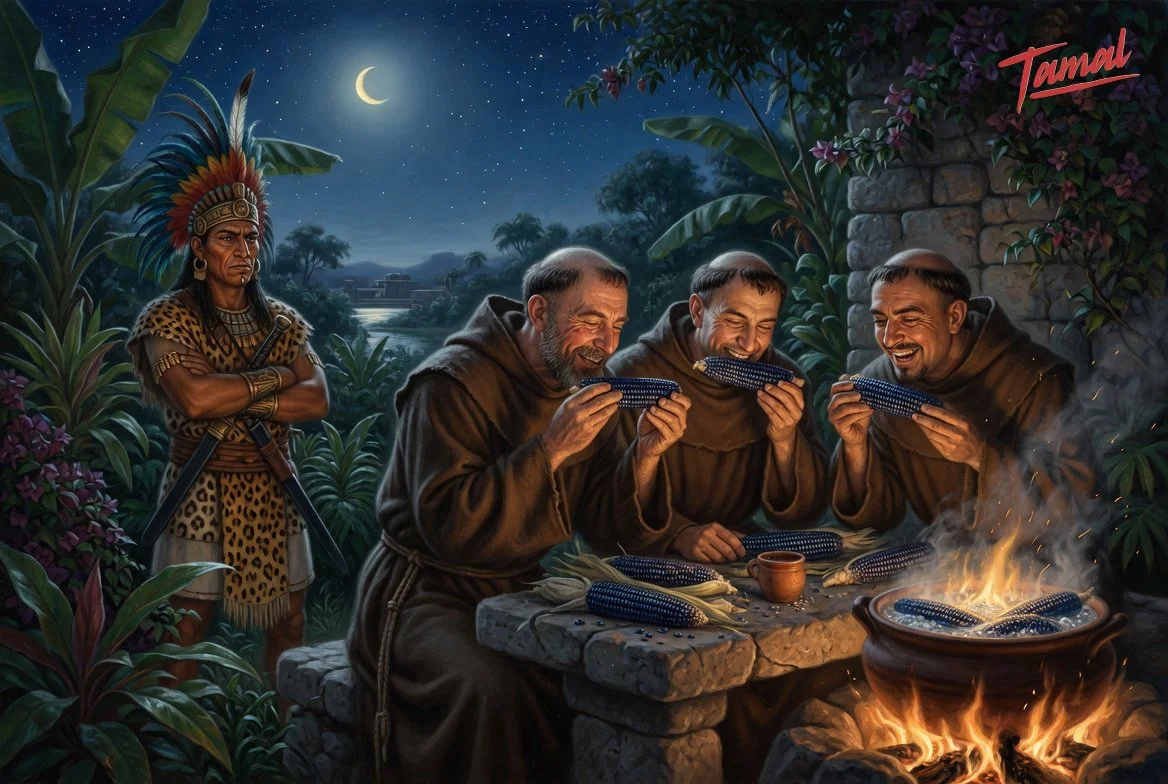
The Tamal They Tried to Cancel: How Spanish Friars Framed Corn to Starve Out the Aztec Gods
Picture this: 1521. Tenochtitlán is still smoldering. Hernán Cortés and his gold-hungry crew have toppled the Aztec empire, but the real culture war is just getting started. In march the friars—black-robed Franciscans and Dominicans with crosses in one hand and holy water in the other—ready to save souls by any means necessary. And their first target? Not the temples. Not the human sacrifices (those were already getting the axe). Corn.
Not because corn was “evil.” Oh no. Corn was innocent. It was just too powerful.
To the Aztecs, maize wasn’t lunch. It was a god. Literally. Centeotl, the maize deity, sat at the center of their universe. Corn was life force, fertility, the reason empires rose and fell. They didn’t just grow it, they honored it. Every eight years they threw the Atamalcualiztli festival: an entire week of eating nothing but plain “water tamales” so the corn spirit could rest. Tamales weren’t street food. They were sacred offerings, stuffed with ritual meaning (and sometimes amaranth, beans, or chile), wrapped in corn husks like little edible prayers. Women stayed up for days cooking them for the gods. Tamales were communion, Aztec-style.
The friars took one look at this and lost their collective minds.
“These heathens are feeding their stone idols tamales? They’re shaping amaranth dough into little god cookies, mixing it with honey (or worse), parading them around, then eating them like it’s the body of their false gods? This is devil’s work!”
So they did what any self-respecting colonial power would do: they went after the supply chain of belief itself.
Ritual corn preparations? Discouraged, mocked, or outright banned in religious contexts. Amaranth (the sacred grain) the Aztecs popped and mixed into tzoalli dough for god-shaped offerings that suspiciously resembled the Eucharist, got the full treatment. Fields burned. Cultivation outlawed. Growing it could get you in serious trouble. The Spanish saw the uncomfortable parallel between Aztec “eat the god” ceremonies and Catholic communion and decided the safest move was to erase the competition.
It wasn’t personal against the cob. It was strategic spiritual sabotage. Starve the old gods of their favorite snacks, and maybe the people would finally accept the new one. Classic colonial playbook: control the plate, control the soul. Slightly comical in hindsight? The image of these sweaty Europeans in heavy robes frantically trying to cancel a vegetable while the locals just kept steaming tamales in secret… yeah, it’s got some dark comedy to it.
But here’s the beautiful, delicious twist: it didn’t work.
The tamal went underground, evolved, survived, and came out the other side more legendary than ever. Today it’s the ultimate symbol of Mexican resilience—proof that you can suppress the ritual, burn the fields, rewrite the calendar, and the people will still find a way to wrap their history in corn husks and keep the flavor alive.
So the next time you bite into a steaming tamal at Tamal on the Square, remember: you’re not just eating dinner. You’re tasting the food that outlasted an empire, survived the colonial push to replace its sacred role, and rose again as a joyful celebration of Mexican resilience and living heritage.
Come get yours, history never tasted so good.